Doug Antin logo

Tracking System

How Fast Is Intelligence Getting Cheaper?

Commoditized intelligence is the thesis. The rate at which it gets cheaper determines how much time you have to prepare and gain positioning. This page (currently v1) tracks that rate of change using public signals I've found, interpreted through the lens of the Agency Era thesis.

The question this page is meant to help answer is simple: how urgently do you need to act? If capability is rising, prices are falling, and the training race is still accelerating, the window to adapt is likely shorter than it appears. If those curves flatten, the need for urgency changes.

Below, I'm curating some signals to help determine the level of urgency for taking action to adapt to the agency era. The underlying charts come from providers who track the specific data I want better than I could. What I'm adding below is my interpretation: what each signal says about the long march toward commoditized intelligence, and what that means for decisions about work, skills, capital, and time.

This will be updated as new data becomes available.

Signal 1

Frontier Model Capability

Image source: Artificial Analysis
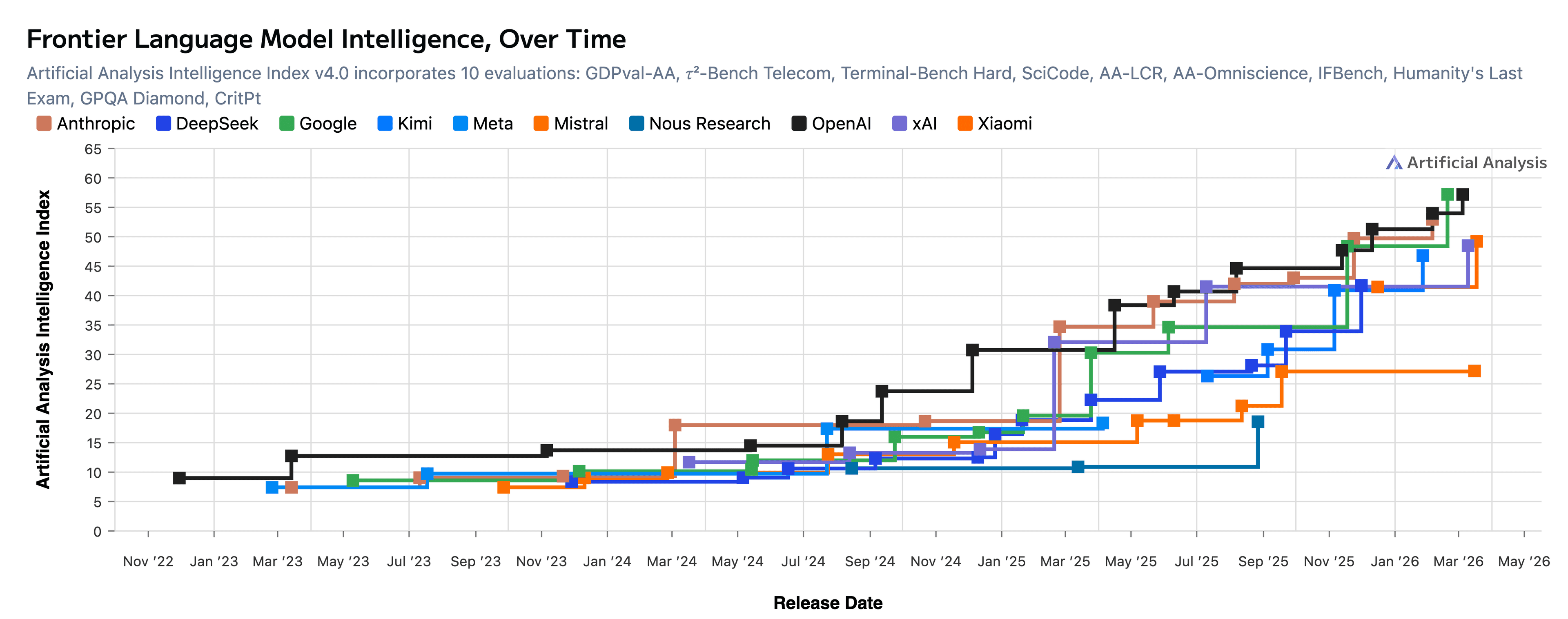
Frontier Language Model Intelligence, Over Time chart from Artificial Analysis.

What this tells us

The frontier of AI intelligence is still moving up quickly, but the more important signal may be the crowding at the top. AI capability is no longer a story about a single dominant lab pulling away. It's becoming a story about multiple labs reaching increasingly similar performance thresholds in rapid succession. That matters because intelligence starts behaving more like a commodity when the performance gap narrows and the market has more interchangeable supply. In other words, lots of competition creates a forcing function for increased capabilities at lower prices.
Signal 2

Pricing Per Million Tokens

Image source: Epoch AI

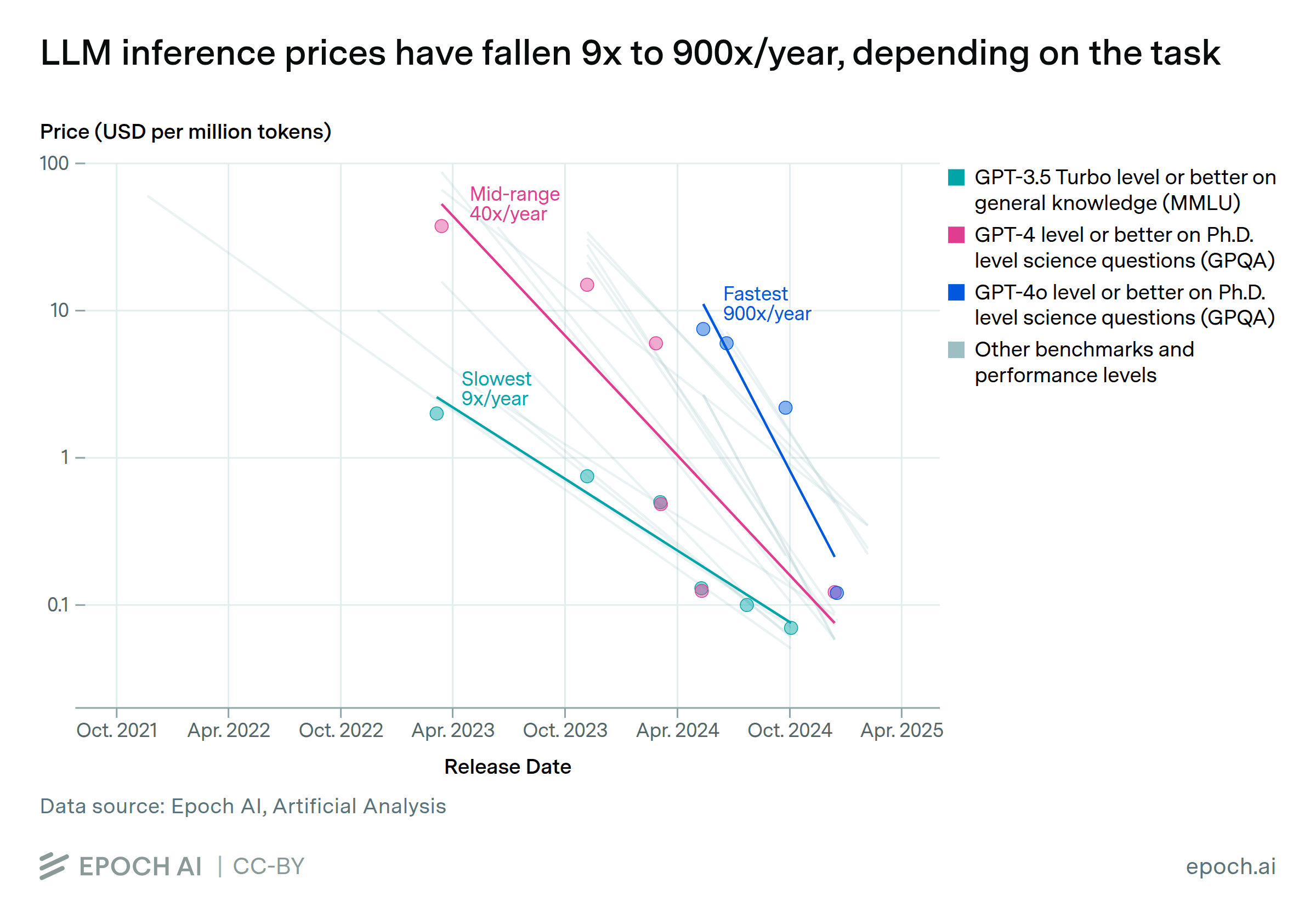
LLM inference price trends chart from Epoch AI.

What this tells us

Prices are falling faster than capability is improving. That's the most important ratio on this page. Frontier labs are subsidizing usage aggressively to capture market share and to get users to build habits. The question is how long that subsidization is sustainable given the compute and energy constraints documented in the thesis tracker. Watch for the moment pricing flattens or reverses. That's when you'll know the infrastructure bottleneck is binding, and it will tell you a lot about which problems intelligence gets deployed to solve first: the expensive problems, the ones with enough margin to justify the compute.

Signal 3

The Compute Buildout Is Real

Image source: Epoch AI

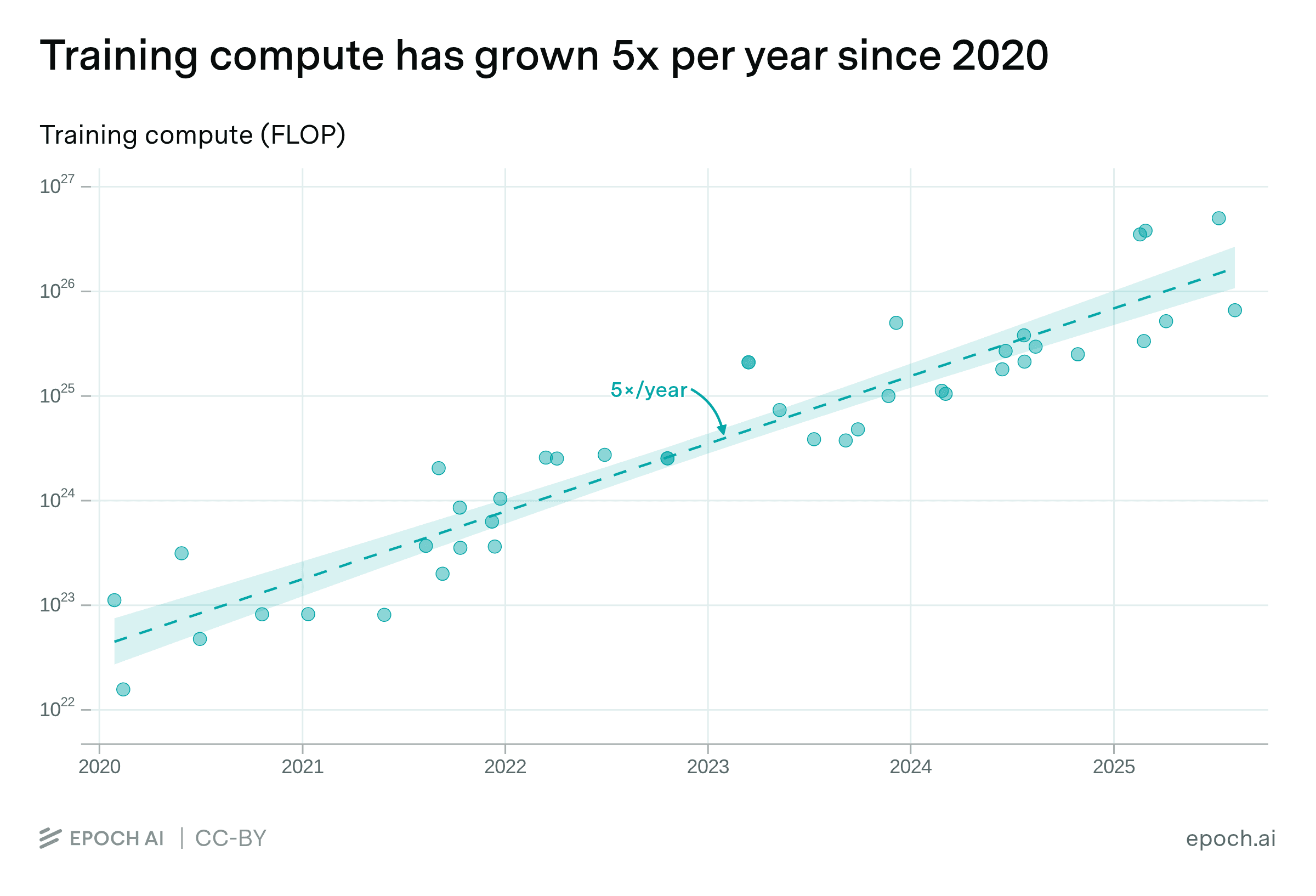
Training compute trend chart from Epoch AI.
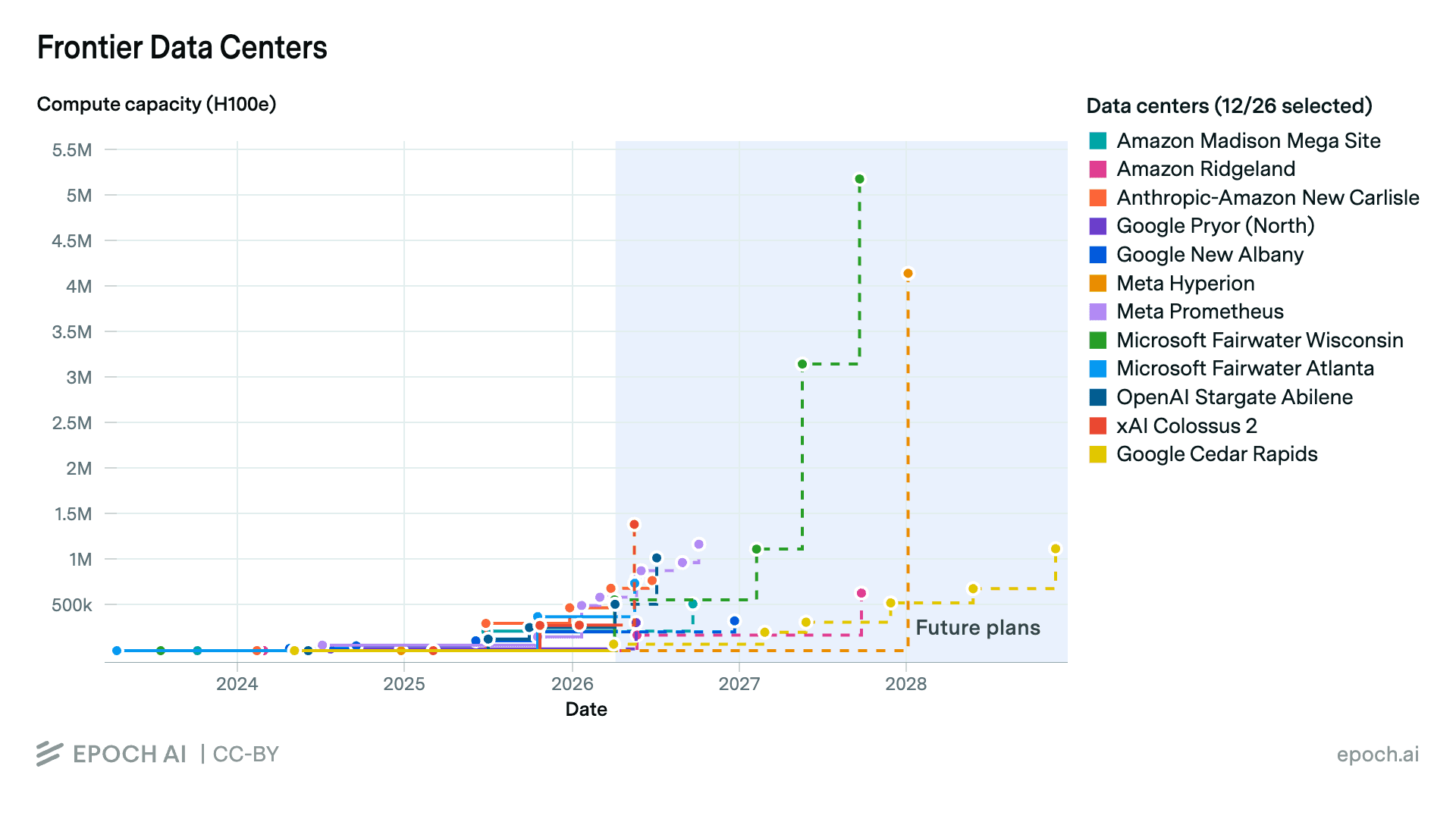
Frontier data centers compute capacity chart from Epoch AI.

What this tells us

The infrastructure layer is still compounding fast. Installed compute is rising, and planned frontier campuses imply that major labs and hyperscalers are still underwriting a much larger intelligence economy than what exists today. The physical commitment matters because it is harder to fake than model demos or narrative enthusiasm. The buildout itself is a signal.

Closing

This page is one part of a broader system I'm building to track the long march toward commoditized intelligence. The Thesis Tracker monitors the public market names most exposed to the transition. The essays I'm writing help me develop the frameworks for how to think about the changes we're seeing. This page tracks the capability curve itself. Together, they're meant to support better decisions about work, capital, and time in the agency era.